

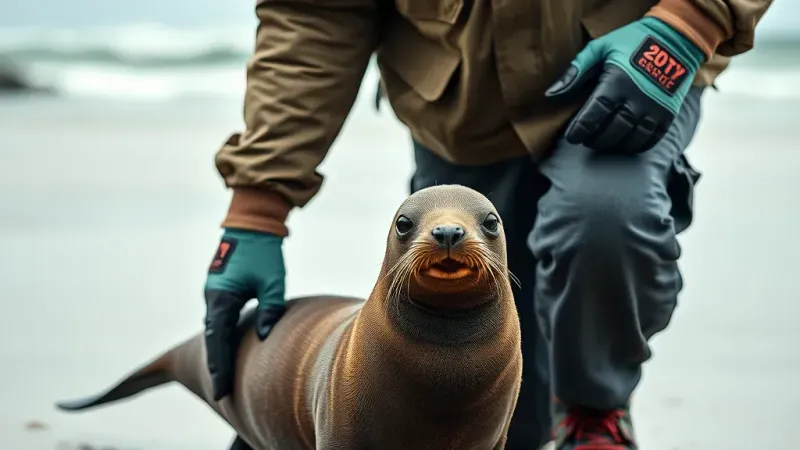
NOAA Fisheries officially announced that a widespread sea lion mortality event has concluded after spanning three years along the California coast. According to the federal agency, the prolonged crisis resulted in eight thousand one hundred twelve juvenile sea lions stranding along the coastline during the course of the event. NOAA Fisheries stated that malnutrition caused by prey shifts drove the unusual mortality event, impacting marine populations up and down the state.
While the overarching mortality event has now concluded, wildlife encounters and strandings continue to require intervention from regional rescue organizations. In one notable recent incident, a young adult male sea lion crossed four lanes of Cabrillo Boulevard, creating an unusual obstruction on the busy roadway. Ruth Dover told The Santa Barbara Independent that the stranded marine mammal was found "impatiently waiting" by responders during the morning hours. When questioned about the animal's unexpected urban journey and erratic movements across the multi-lane street, Ruth Dover also told The Santa Barbara Independent, "It can’t tell us" what prompted it to leave the marine environment and venture into traffic.
Prompt action from wildlife professionals ensured the safety of both the public and the animal. Ruth Dover and the Channel Islands Marine Wildlife Institute successfully rescued the sea lion by nine fifteen a.m., removing it from the roadway and returning it to care. This rescue operation is part of a broader, ongoing effort by marine mammal protection groups in the region. According to documentation from CIMWI, CIMWI rescued twenty two malnourished sea lion pups in twenty three days, highlighting the persistent challenges local wildlife workers face as recovering animals continue to struggle with nutritional deficits and environmental stressors along the coast.
The conclusion of the three-year mortality event marks a significant milestone for marine resource managers and conservationists who monitored the high volume of strandings. The data compiled by NOAA Fisheries throughout the multi-year crisis underscores the vulnerability of juvenile marine populations to ecological changes, particularly fluctuations in prey availability. Organizations such as the Channel Islands Marine Wildlife Institute remain on alert to assist animals affected by these ongoing environmental shifts, ensuring that individual strandings continue to receive rapid professional response throughout the region.