

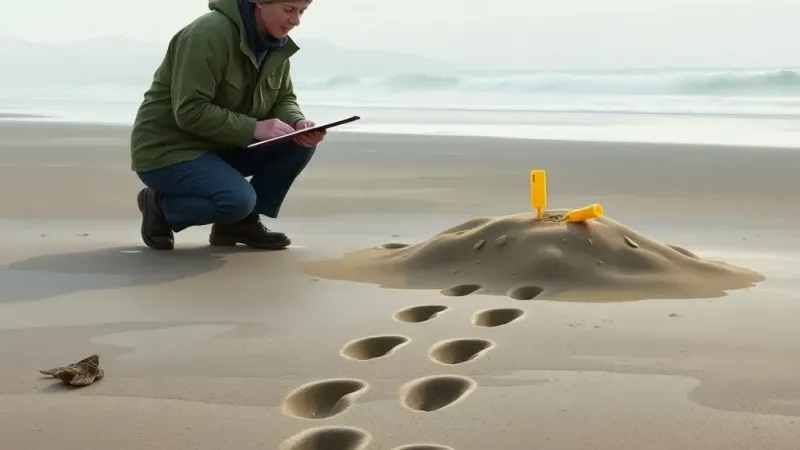
An olive ridley sea turtle recently nested on a Ventura beach, creating a notable event for observers interested in marine life along the coast. To properly identify the species, experts point out that olive ridleys feature heart-shaped shells with olive green coloring, traits that set them apart from other sea turtles inhabiting marine waters.
The presence of an olive ridley sea turtle nesting on a Ventura beach unfolds against the backdrop of extensive tracking by conservation authorities. Data published by the International Union for Conservation of Nature and Natural Resources Red List reveals concerning long-term trends for the species. Specifically, the International Union for Conservation of Nature and Natural Resources Red List notes that the global population size saw a 30 to 36 percent reduction over the last century. This calculated drop means that the global population size saw a 30 to 36 percent reduction over the last century, illustrating the cumulative historical pressures affecting olive ridleys across their worldwide distribution.
While the nesting on the Ventura beach highlights direct coastal activity in California, other events involving the species have been recorded further south. Records indicate that orange county nests had two egg clutches moved to the Aquarium of the Pacific. The management of these orange county nests involved two egg clutches being safely transferred to the Aquarium of the Pacific, where specialized facilities can monitor the delicate eggs.
Understanding the life cycle of these marine reptiles also involves examining their reproductive timing. Observations of the species confirm that the gestation period lasts slightly under six weeks. This vital developmental window—where the gestation period lasts slightly under six weeks—dictates the timeline from nesting to the emergence of hatchlings.
Reviewing the complete set of documented occurrences provides a clear and thorough picture of the current state of the species. From the solitary olive ridley sea turtle that nested on a Ventura beach, to the orange county nests where two egg clutches were successfully moved to the Aquarium of the Pacific, to the well-documented biological fact that the gestation period lasts slightly under six weeks, and finally to the sobering global assessment from the International Union for Conservation of Nature and Natural Resources Red List demonstrating that the global population size saw a 30 to 36 percent reduction over the last century, each piece of information reinforces our core knowledge of these unique marine animals, which feature distinctive heart-shaped shells with olive green coloring.