

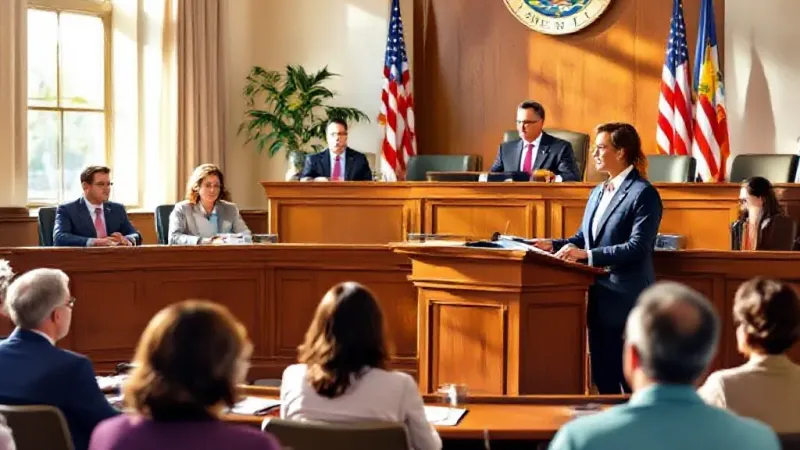
As The Santa Barbara Independent reported, no public speakers attended the Tuesday Board of Supervisors hearing held by local officials to discuss matters concerning local land use and tribal affairs. The primary subject of the hearing centered on the official application submitted by the Santa Ynez Band of Chumash Indians. Specifically, the Santa Ynez Band of Chumash Indians applied to place three hundred sixty-five acres into federal trust. Under the administrative rules governing such a transfer, a fee to trust action exempts the designated land from county land use restrictions and property taxes, which forms the basis of the county's ongoing administrative review and discussion.
During the course of the Tuesday hearing, county officials reflected extensively on previous interactions and historical developments involving tribal properties. Specifically, Supervisor Steve Lavagnino recalled past disputes over the Camp four parcel that took place ten years ago. To understand the magnitude of the ongoing regional planning considerations, it was noted that the Camp four property involves one hundred forty-three units of housing development. After evaluating their options and consulting on administrative and legal constraints, the Board of Supervisors agreed that they lacked a legal position to sue the tribe over the trust application.
Seeking constructive pathways forward rather than adversarial confrontation, Supervisor Joan Hartmann suggested reaching out to the tribe to negotiate mitigations regarding the trust land. In connection with these administrative communications, tribal leader Kenneth Kahn requested written recognition of tribal governance rights from the local governing body. Additionally, to maintain clear channels of communication between the county and the tribal government, Supervisor Joan Hartmann asked Kenneth Kahn to appoint a new tribal liaison, noting for the record that the former tribal liaison, Sam Cohen, has moved on.
Providing further context on the broader operational and historical framework surrounding the tribe, several other facts were highlighted during the regional review. For instance, the current compact allows the tribe up to two gaming centers. Looking deep into the historical timeline of the region's indigenous population, records indicate that original Chumash holdings encompassed seven thousand square miles. Over the course of subsequent decades and centuries, however, this vast ancestral territory experienced a drastic reduction, with reservation property having dwindled to ninety-nine acres by eighteen ninety-seven.