

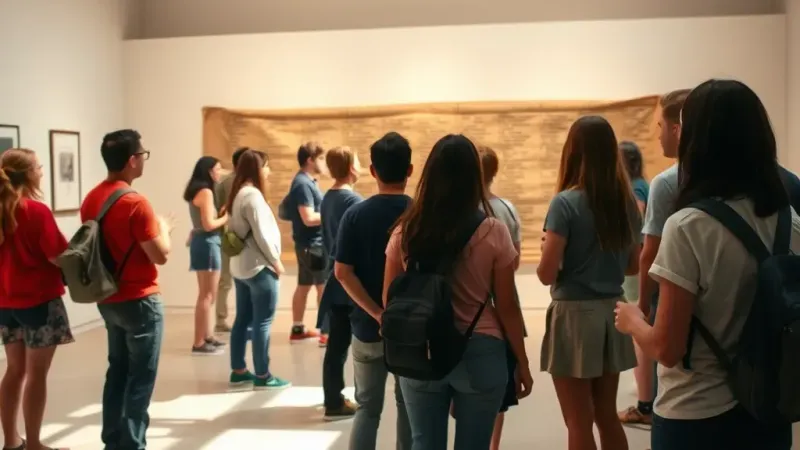
As The Santa Barbara Independent reported, the UCSB Art, Design and Architecture Museum is currently hosting an exhibition by artist Jackie Amézquita. The exhibition brings important contemporary artistic works to the campus, offering visitors an opportunity to engage with profound social themes and memorial projects. The project date for this ongoing body of work is listed as 2020-ongoing, reflecting a sustained creative endeavor by Jackie Amézquita.
The centerpiece of the museum exhibition is titled Gemidos de la Tierra, which translates to Wailings of the Land and Soil. This powerful installation artwork lists 241 names of individuals who died in ICE custody. The creation of these names involves a meticulous and symbolic process, as the names are cast from soil, masa, salt, and rainwater. These elemental materials ground the memorial in the physical earth, carrying deep symbolic meaning regarding life, survival, and loss.
Public engagement has played a key role in the presentation of the work. An activation took place in Inglewood and outside the AD&A Museum on November 1, bringing the powerful themes of the project directly into public spaces and connecting communities across different locations. For those wishing to view the installation in person, the exhibition is on view through November 29 at the UCSB Art, Design and Architecture Museum.
In addition to the exhibition by Jackie Amézquita, the UCSB Art, Design and Architecture Museum is also featuring another notable presentation. The museum is hosting a show by Bonnie Ora Sherk titled Life Frames since 1970, providing visitors with an additional cultural experience alongside the main galleries.
The emotional and political impact of Jackie Amézquita's work is further illuminated by museum documentation. A curatorial statement obtained by The Santa Barbara Independent stated that the artwork "honors the humanity of people whose lives have been reduced to statistics, offering a stark contrast to the cold, bureaucratic erasure that often accompanies death with carceral systems."
Elaborating on this theme, the curatorial statement obtained by The Santa Barbara Independent also noted that the artwork "is more than a memorial or sculpture; it is a public record and living altar." Through these words and the careful arrangement of soil, masa, salt, and rainwater, the exhibition at the UCSB Art, Design and Architecture Museum stands as a significant cultural and public testament.