
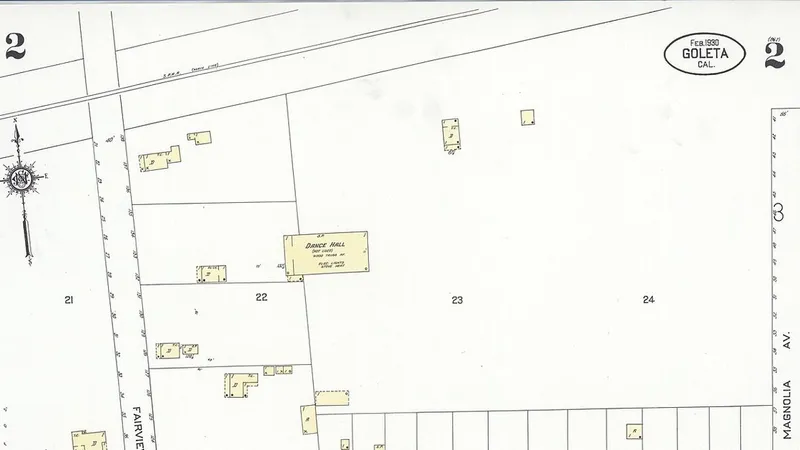
The Mosquito and Vector Management District of Santa Barbara County has issued an advisory following the recent detection of invasive Aedes aegypti mosquitoes near North Turnpike Road and Calle Real. This aggressive, daytime-biting species presents a significant threat of becoming established in Santa Barbara County if swift measures are not taken, according to the district.
Often called “ankle biters,” Aedes aegypti mosquitoes feed aggressively on humans both indoors and outdoors. The Vector Management District reported collecting several adult specimens and larvae of Aedes aegypti on October 16 from the vicinity of North Turnpike Road and Calle Real, in the unincorporated area of Santa Barbara County located between Santa Barbara and Goleta. This discovery follows an earlier detection of the species in Carpinteria in July of this year, and a previous detection in Santa Barbara County in 2021.
Aedes aegypti is the second invasive mosquito species currently threatening to establish itself in the region. The first, Aedes notoscriptus, known as the Australian backyard mosquito, was detected in Santa Barbara’s West Side neighborhood in March and the Mesa neighborhood in June. Unlike native mosquitoes, both Aedes species bite humans during both daytime and nighttime hours, indoors and outdoors, which could cause substantial irritation and discomfort for residents in local neighborhoods, officials warn.
Brian Cabrera, general manager of the Mosquito and Vector Management District, emphasized the importance of community involvement. He stated that while population numbers are low, there is still an opportunity to eliminate these highly bothersome, introduced insects from neighborhoods. Cabrera urged the public to assist in preventing these species from becoming established in Santa Barbara County by eliminating standing water where eggs can be laid and by contacting the district if they suspect bites from these mosquitoes.
Native to Africa, Aedes aegypti was first identified in California in 2013 and has since spread across Southern California and the Central Valley. Globally, this species is capable of transmitting viruses such as Dengue, Zika, Chikungunya, and yellow fever. In Los Angeles County, 20 confirmed cases of locally transmitted Dengue infection were reported in 2024 and 2025. The other three viruses are not known to be present in California.
In Australia, Aedes notoscriptus is the primary carrier of dog heartworm. While a native mosquito species serves as the main vector for dog heartworm in California, pet owners are advised to ensure their pets are protected. Preventative medications are readily available through local veterinarians.
Both invasive Aedes species prefer to remain close to human dwellings. Female mosquitoes lay their eggs in nearly any container that holds stagnant water, including buckets, old tires, birdbaths, pet dishes, saucers under potted plants, clogged yard drains, and even water trapped within plants like bromeliads. The larvae of these species can complete their development in as little water as a single bottle cap, and their eggs can survive drying out for many months.
To combat the threat, the district urges all Santa Barbara County residents to implement the following preventative measures:
* **Dump and Scrub:** Remove all sources of standing water inside and outside your home, and scrub the sides of containers to destroy clinging eggs. * **Protect Your Home:** Keep doors closed and ensure all window and door screens are in good repair. * **Protect Yourself:** Wear long-sleeved shirts and long pants, and apply EPA-approved insect repellent when outdoors. * **Protect Your Pets:** Consult a veterinarian to confirm that dogs are on heartworm prevention medication.
Residents experiencing aggressive mosquito bites, particularly around the feet and ankles during daytime hours, or who observe large collections of standing water in their neighborhood, should report these instances immediately. The Mosquito and Vector Management District can be contacted at 805-969-5050 or through the Contact Us page on its website.
The Mosquito & Vector Management District operates as an independent local government agency, providing community-based services funded by taxes and overseen by an elected board of trustees.